Keep everything together
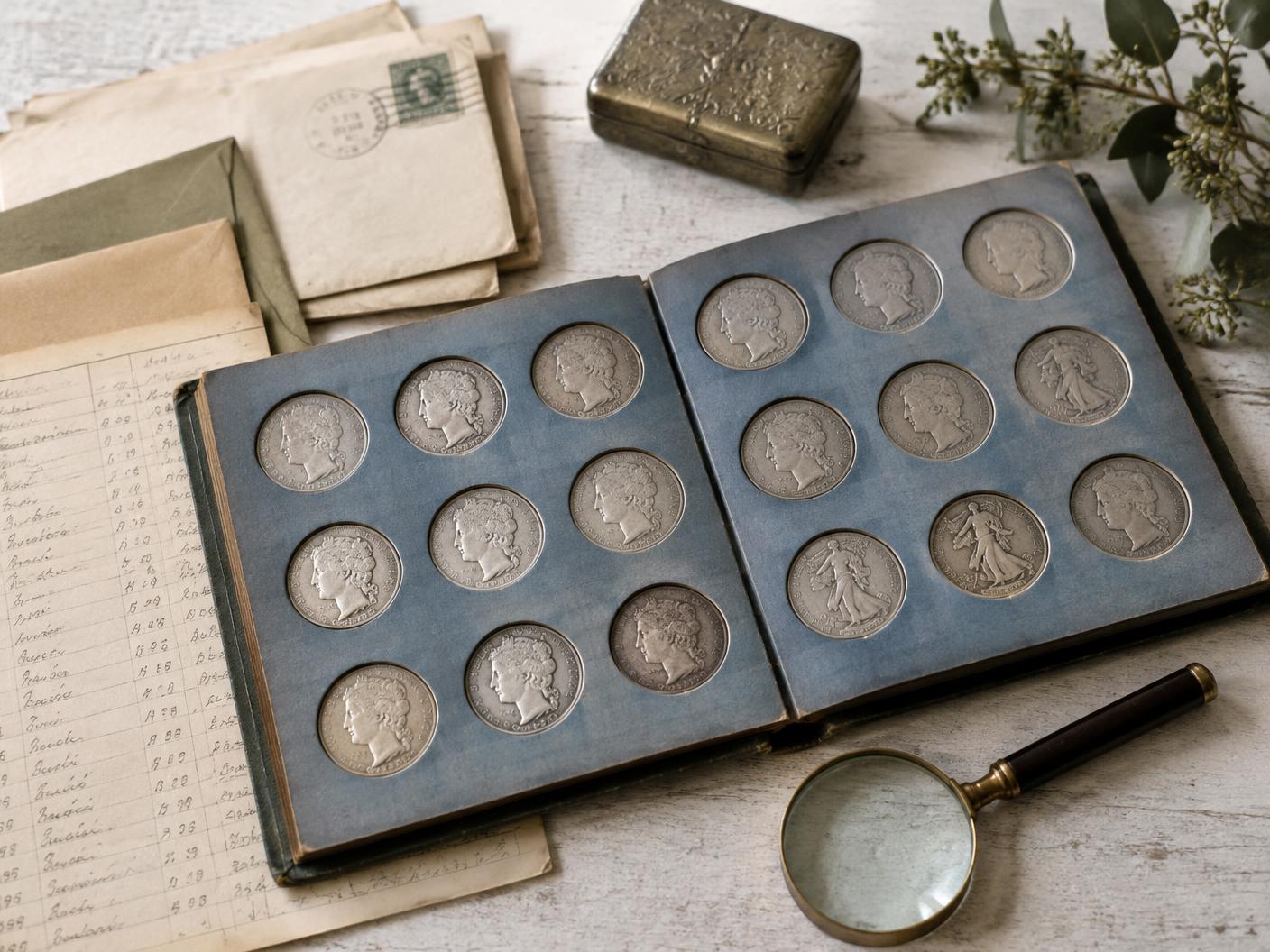
Albums, folders, envelopes, loose coins, jewelry boxes, and the handwritten notes tucked in among them. The notes often explain a collection better than the pieces do.
Inherited Jewelry & Coins
An inheritance can carry both financial value and personal meaning. Whether you have a few treasured pieces or a collection built over a lifetime, we help you understand what you have, what may influence its value, and the options available to you—so you can decide with confidence.
What to expect
Sitting with a parent’s or grandparent’s jewelry box or coin albums is rarely a purely practical task. Often the pieces are bound up with a person, and the hardest part is not the sorting — it is knowing where to begin.
We begin by looking at what you have and explaining it plainly: what is collectible, what is valued mainly for its materials, what is simply interesting, and what someone in the family might want to keep. You will leave understanding the inheritance better than when you arrived, whatever you decide afterwards.
Nothing needs to be sold for that conversation to be worth having, and we will never press you toward a decision on the day.
How it works
01
What you have inherited, whatever paperwork came with it, and the questions on your mind. Priorities differ — some families want understanding first, others have a decision to make. You do not need to know any terminology to begin.
02
Bring coins in the holders and albums they already live in, and jewelry along with any receipts, grading reports or earlier appraisals. Depending on the item, condition, rarity, materials, craftsmanship and current market demand may all influence value, and we will point out which of those apply to yours.
03
We explain our reasoning in plain language, and we keep a purchase offer and a formal written appraisal clearly separate. Scope, documentation and any fees are discussed and agreed before anything proceeds. An existing appraisal figure is a record of an opinion, not a promise of resale proceeds.
04
Keep the pieces that mean something, seek further information elsewhere, or consider selling some or all of it. Whichever you choose, you will get patient answers and an informed choice. There is no pressure and no obligation to sell anything.
Our commitment: clear explanations, patient answers, and respect for your decision.
Before you come in
General guidance only, and none of it is required. If you would rather simply bring everything as it is, that is completely fine.
Before you visit
Albums, folders, envelopes, loose coins, jewelry boxes, and the handwritten notes tucked in among them. The notes often explain a collection better than the pieces do.
It is the most common and most costly mistake with coins, and polishing jewelry can remove original finish and detail. Let it be looked at first.
Receipts, certificates, grading reports, inventory lists and old letters all help establish what was bought, when, and sometimes why.
Sets and matched pieces are usually better understood intact. If the family intends to split things later, that is easier after everything has been looked at.
Many people come in with a sibling, a spouse or the executor. A second set of ears is genuinely useful when there is a lot to take in.
There is no advantage to deciding quickly. The conversation can happen now and any decision can happen months later.
Where this can lead
An informal evaluation tells you what you have and roughly where its value sits. A written appraisal is a documented piece of work prepared for a stated purpose. An offer to purchase is a figure we would pay. They are not the same thing, and we keep them distinct so you always know which one you are being given.
We describe what we can see and explain our reasoning; we do not hold ourselves out as gemological testing laboratories or certifying bodies, and we will say so plainly when something is outside what we can assess. Questions about taxes, probate procedure or how an estate should be divided are for your own attorney or accountant.